

📌 Overview
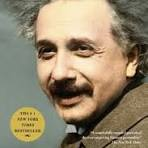
Albert Einstein (1879–1955) was a German-born theoretical physicist whose revolutionary ideas reshaped our understanding of space, time, and energy. Beyond science, he was a philosopher, humanitarian, and outspoken advocate for peace and civil rights.
🌍 Great Contribution to Humanity
Einstein’s most profound gift to humanity was his Theory of Relativity, which includes:
- Special Relativity (1905): Introduced the concept that time and space are relative, not absolute.
- General Relativity (1915): Explained gravity as the curvature of spacetime caused by mass.
His famous equation E = mc² revealed that mass and energy are interchangeable, laying the groundwork for nuclear energy and modern physics.
Other contributions:
- Explained the photoelectric effect, which earned him the Nobel Prize in Physics (1921) and helped launch quantum mechanics.
- Predicted gravitational waves, confirmed a century later.
- His work influenced technologies like GPS, lasers, and solar panels.
🧘 Philosophy of Life
Einstein believed in simplicity, integrity, and service to others:
“Try not to become a man of success, but rather try to become a man of value.”
His core beliefs:
- Live simply: He valued modesty and clarity over material wealth.
- Serve humanity: He saw fulfillment in helping others and advancing knowledge.
- Seek truth and beauty: Science and art were both paths to understanding the universe.
He viewed life as meaningful only when lived in connection with others and in pursuit of higher ideals.
✡️ Religious Life
Einstein was raised in a secular Jewish family but developed a deep spiritual curiosity. His views evolved into a form of cosmic spirituality:
- He did not believe in a personal God, but admired Spinoza’s God — a divine presence revealed in the harmony of nature.
- He described himself as a “religious nonbeliever” or agnostic, rejecting superstition but embracing awe and reverence for the universe.
- Famous quote:
“Science without religion is lame, religion without science is blind.”
Einstein’s spirituality was rooted in wonder, humility, and the pursuit of truth.
🗳️ Political Ideas
Einstein was deeply engaged in global and ethical issues:
- Pacifist and anti-war activist: Opposed militarism and nationalism.
- Civil rights advocate: Spoke out against racism in the U.S. and supported African American causes.
- Democratic socialist: Criticized capitalism’s inequalities and supported a fairer economic system.
- World government supporter: Believed in international cooperation to prevent war.
He refused to support authoritarian regimes and was outspoken against fascism and McCarthyism.
📐 Mathematical Formulas
Einstein’s work introduced several groundbreaking equations:
| Formula | Meaning |
|---|---|
| E = mc² | Energy equals mass times the speed of light squared — mass-energy equivalence |
| Einstein Field Equations | Describe how matter and energy shape spacetime curvature (gravity) |
| Photoelectric Equation (E = hf) | Energy of a photon equals Planck’s constant times frequency — foundation of quantum theory |
| Brownian Motion Equations | Explained random motion of particles, proving the existence of atoms |
These formulas revolutionized physics and remain central to modern science.
Albert Einstein’s theories didn’t just revolutionize physics—they quietly power much of the tech we rely on every day. Here’s how his work continues to shape modern life:
📡 GPS and Relativity
- GPS satellites orbit Earth at high speeds and altitudes, where time ticks differently due to Einstein’s theories of relativity.
- Without correcting for time dilation and gravitational effects, GPS would be off by several kilometers daily.
☀️ Solar Panels and the Photoelectric Effect
- Einstein’s explanation of the photoelectric effect showed how light knocks electrons loose from atoms.
- This principle is the backbone of solar energy, enabling solar panels to convert sunlight into electricity.
- ⚛️ Nuclear Energy and E = mc²
- His famous equation E = mc² revealed that mass can be converted into energy.
- This concept powers nuclear reactors and explains the immense energy released in atomic fission.
- 🔬 Lasers and Quantum Theory
- Einstein’s work on stimulated emission laid the foundation for laser technology.
- Lasers are now used in everything from barcode scanners and fiber optics to medical devices.
- 🌌 Black Holes, Gravitational Waves, and Space Exploration
- His general theory of relativity predicted black holes and gravitational waves, both confirmed decades later.
- These discoveries guide space missions, cosmology, and even time travel theories.
- 🧯 Smoke Detectors and Safety Tech
- The photoelectric effect also powers smoke detectors, which use light to detect smoke particles and trigger alarms.
- 🧠 Computing and Quantum Mechanics
- Einstein’s early quantum work helped shape semiconductor physics, which underpins modern computing.
- His ideas continue to influence quantum computing, a frontier of next-gen tech.
- Einstein’s genius wasn’t just theoretical—it’s embedded in the devices, systems, and infrastructure we use every day. Want to turn this into a visual guide or infographic for your clients or trainees? I’d be glad to help.
🧾 Closing Thought
Albert Einstein was more than a scientist — he was a beacon of curiosity, compassion, and courage. His legacy continues to illuminate the path for thinkers, dreamers, and doers across every field.
Albert Einstein Famous Quote:
“Life is like riding a bicycle. To keep your balance, you must keep moving.”