

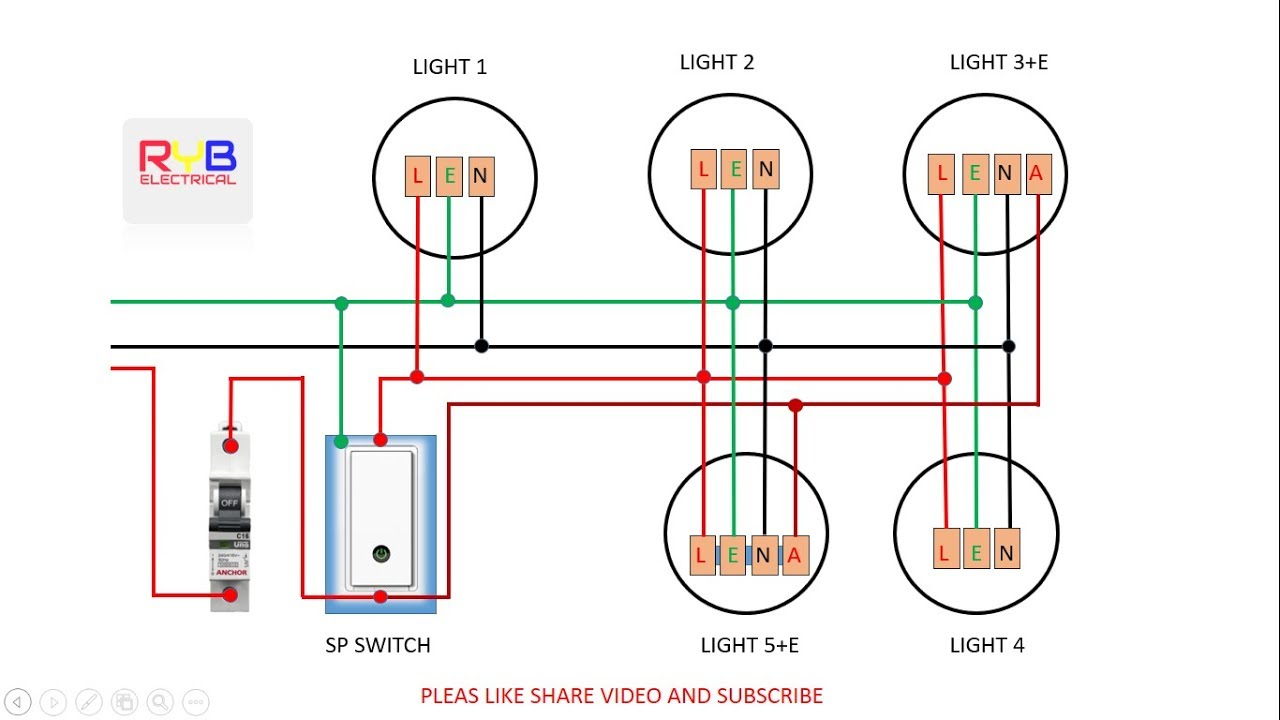
Let’s dive into how emergency lighting works in three environments—commercial vessels, industrial facilities, and general commercial buildings—then break down the core equipment types and top off with a unified connection diagram.
1. Marine Emergency Lighting (Commercial Boats)
- Power Sources
- Emergency Generator (SOLAS-compliant): Kicks in within seconds of main generator failure.
- Battery Backup: Sealed lead-acid or NiMH banks sized for at least 90 minutes of operation.
- Fixture Types
- Escape-route luminaires: Waterproof, corrosion-resistant, marked for “EXIT.”
- Floodlights: High-output for open spaces (decks, machinery spaces).
- Bulkhead units: Low-profile for passages.
- Control & Switching
- Change-over panel: Automatically senses loss of main power and switches loads to the emergency bus.
- Indicator lights: Show “emergency on” status at the master control station.
2. Industrial Emergency Lighting
- Power Sources
- Central Battery System: A bank of batteries feeding multiple remote heads.
- Local Battery Packs: Self-contained units for individual fixtures.
- On-site generator + UPS: Keeps critical zones lit and powered.
- Fixture Types
- High-bay emergency heads: For warehouses and tall racking areas.
- Remote heads: Small lamp heads fed by core battery cabinet.
- Exit & directional signs: Rugged for harsh environments.
- Monitoring & Testing
- Manual test switch: Allows on-demand power-fail simulation.
- Automatic self-test: Periodic checks, fault indicators on battery cabinet.
3. Commercial Building Emergency Lighting
- Power Sources
- Integral (spot-unit) fixtures: Battery-slave in each luminaire.
- Central inverter systems: One inverter feeds all fixtures for 90-minute runtime.
- Fixture Types
- Accent/emergency downlights: Blends with normal lighting.
- Emergency bulkheads: Corridor and stairwell lighting.
- Exit signage: Usually LED-based with battery backup.
- Code Highlights
- NFPA 101 (Life Safety Code): 1-fc minimum along egress paths.
- NEC 700: Defines emergency circuit requirements and transfer schemes.
4. Core Emergency-Lighting Equipment
- Battery Units
- Central cabinets vs. self-contained packs
- Automatic Transfer Switch (ATS)
- Transfers emergency loads in <1 second
- Inverter / Charger
- Keeps battery charged; inverts DC to AC on fail
- Test & Monitoring Panel
- Meters, fault LEDs, manual-test pushbutton
- Emergency Fixtures
- Integral or remote heads, exit signs, floodlights
5. Unified Connection Diagram
Below is an ASCII-style single-line diagram showing both central-battery and self-contained approaches.
┌───────────────────────────┐ │ Main Panel │ │ (Normal AC Supply 120V) │ └────────────┬────────────┘ │ ┌──────▼──────┐ │ ATS / Transfer │ │ Switch │ └──────┬──────┘ │ ┌─────────▼─────────┐ │ Emergency │ │ Inverter │ │ + Charger/BATT │ └─┬────┬─────┬──────┘ │ │ │ ┌───────▼─┐ │ ┌──▼────────┐ │ Remote │ │ │ Self- │ │ Heads │ │ │ contained │ │ (DC fed)│ │ │ Packs │ └─────────┘ │ └───────────┘ │ ┌──────▼──────┐ │ Emergency │ │ Fixtures & │ │ Exit Signs │ └─────────────┘
- Left branch (Remote Heads): Fed by central inverter/battery cabinet.
- Right branch (Self-contained): Individual fixtures with built-in battery & charger.
Steps & Tips
- For marine installs, confirm SOLAS and flag-state test intervals.
- In industrial settings, group fixtures into zones so that a single battery bank can back up critical aisles.
- In commercial buildings, consider networked self-test systems for code compliance logs.
Site-Ready Emergency Lighting Wiring Schematic
Below is a turnkey single-line/site-reading schematic you can take straight to the field. It shows the main service, transfer switch, inverter/charger, emergency distribution panel, branch circuits to the two fixture groups, and typical cable and conduit sizing.
Legend
- □ Main Service Panel
- ■ Automatic Transfer Switch (ATS)
- ◉ Emergency Inverter/Charger + Battery Cabinet
- ■ Emergency Distribution Panel (EDP)
- ══ Feeder Cable
- ── Branch Circuit Cable
- ❐ Luminaire Group (fixture symbols not shown individually)
Single-Line Diagram
[ Main Service Panel ]────══→ [ ATS (200 A) ] ──══→ [ Emergency Inverter/Charger ] │ │ │ │ │ │ ▼ ▼ [ Emergency Distribution Panel ]──────┐ ■ EDP with (2) × 20 A breakers │ ├─ E1 │─── Branch Circuit 1 ──> ❐ Group A (13 fixtures) └─ E2 │─── Branch Circuit 2 ──> ❐ Group B (13 fixtures)
Cable & Conduit Schedule
| Segment | Cable | Conduit | Notes |
|---|---|---|---|
| Main Service → ATS | 3 × #10 AWG Cu THHN + 1 × #10 AWG Cu THHN | 1″ EMT | 120/240 V split-phase feeder |
| ATS → Inverter/Charger | 3 × #10 AWG Cu THHN + 1 × #10 AWG Cu THHN | 1″ EMT | Same feeder continued |
| Inverter → EDP bus bar | Internal jumpers (per manufacturer) | — | Provided inside cabinet |
| EDP → Branch Circuit 1 (E1) | 2 × #12 AWG Cu THHN + 1 × #12 AWG Cu THHN | ¾” EMT | Feeds 13 fixtures (~4.3 A load) |
| EDP → Branch Circuit 2 (E2) | 2 × #12 AWG Cu THHN + 1 × #12 AWG Cu THHN | ¾” EMT | Feeds 13 fixtures (~4.3 A load) |
Conduit Routing & Mounting
- Feeder Conduit (1″ EMT)
- Run from main panel at rear-center wall up to ceiling level.
- Route over to ATS location (adjacent to panel).
- Continue same conduit from ATS to inverter/charger.
- Branch Conduits (¾″ EMT)
- Two runs from EDP along ceiling joists:
- Circuit E1: West side fixtures, parallel to steel center column.
- Circuit E2: East side fixtures, mirrored layout.
- Slugged with “EMER LIGHT” labels every 5 ft.
- Two runs from EDP along ceiling joists:
- Equipment Mounting
- ATS mounted at 6 ft A.F.F. next to main panel.
- Inverter/Charger + Battery floor-mounted on back wall, 12 in. standoff.
- EDP mounted at 5 ft A.F.F. with clear working space.
Field-Reading Tips
- Confirm conductor derating if more than two circuits share conduit.
- Label both ends of every conduit with circuit ID (E1, E2, FEED).
- Test transfer time (<1 s) before commissioning.
- Include a simple zone-map hand-card at the EDP door showing fixture counts per circuit.
This schematic gives you a clear, code-compliant layout and wiring guide to install and commission your emergency lighting system on site.