

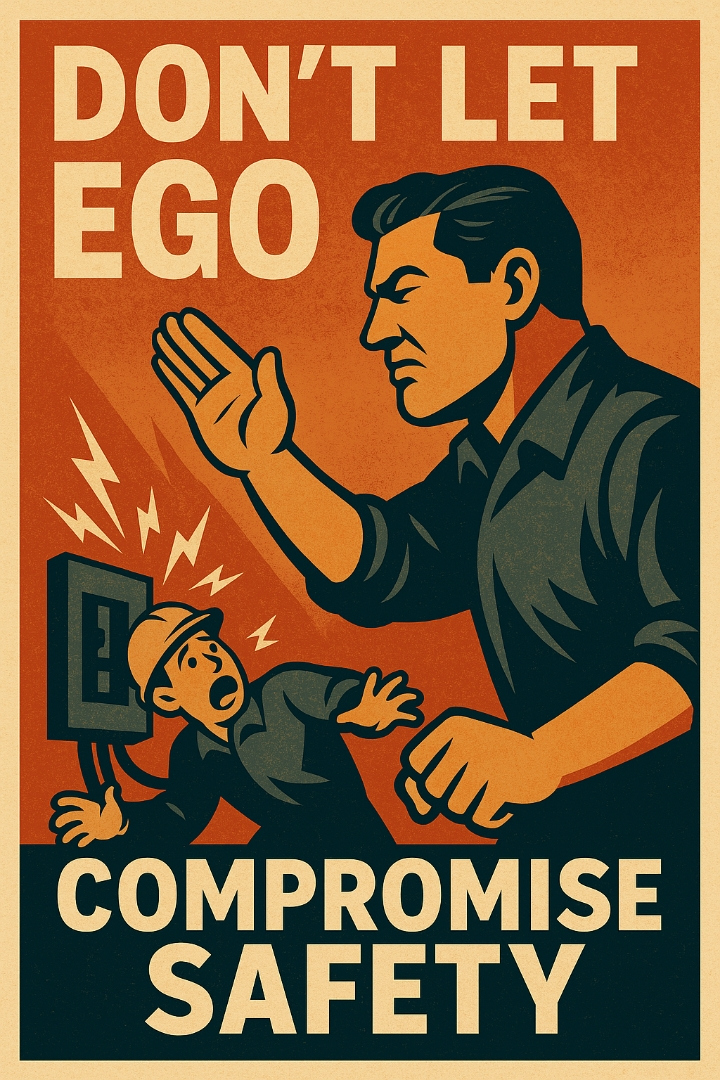
In high-risk professions, skill and knowledge aren’t the only things that keep people safe—humility does too. When ego gets in the way, even the most experienced tradesperson, technician, or engineer can become a liability. The margin for error in these industries is razor-thin, and when pride overshadows caution, it’s not just personal consequences at stake—it’s lives.
👷♂️ Industries at the Front Line
The danger of unchecked ego exists across many critical sectors:
- Electrical Work: Overconfidence in panel configurations, grounding protocols, or code interpretations can result in inspection failures, fires, or electrocution—not just for the worker, but for unsuspecting occupants.
- Construction and Rigging: Ignoring proper load calculations or safety harness procedures can lead to catastrophic structural failures or deadly falls.
- Aviation Mechanics: A missed bolt or skipped checklist step, justified by “experience,” can be fatal.
- Medical Fields: When a surgeon dismisses input from nurses or junior staff, critical details can be overlooked during procedures.
- Emergency Services: Firefighters and police officers who refuse to follow team protocols or communicate clearly risk undermining entire operations.
These aren’t dramatizations—they’re lived realities. In every high-risk environment, decisions must be grounded in respect for process, people, and the sobering weight of potential outcomes.
🚧 Where Ego Shows Up
Ego isn’t always loud or brash. It hides in smaller choices:
- Refusing to ask questions
- Ignoring peer feedback
- “I’ve done this a thousand times” thinking
- Cutting corners to prove speed or expertise
- Undermining less experienced team members
These moments chip away at collective safety. When repeated, they create a culture where silence replaces accountability.
🛠️ How We Change the Culture
Preventing damage—physical, emotional, and reputational—starts with a mindset shift:
- Normalize Questions: Even veterans should model curiosity and humility.
- Elevate Respect: Junior team members and apprentices must feel valued and heard.
- Codify Team Checks: Whether it’s a final panel inspection or a checklist verification, shared responsibility reinforces collective safety.
- Address Ego Early: Training programs should incorporate discussions around ego, humility, and real-case consequences.
- Mentor with Compassion: Senior professionals must lead not just with skill, but with empathy.
If we can reframe “competence” as a blend of knowledge and humility, we build teams that look out for each other—and for those depending on our work.