

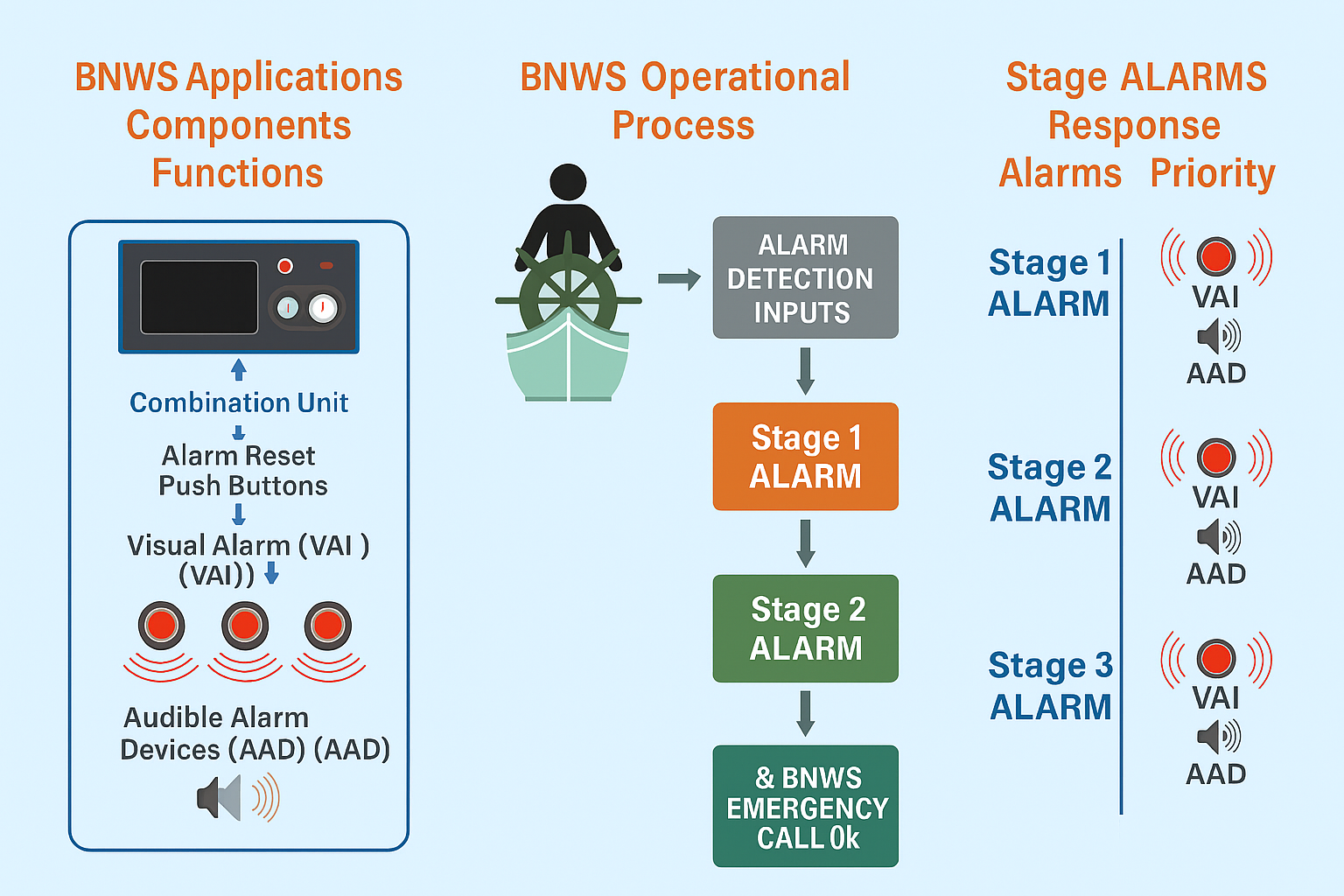
⚓ What Is BNWAS?
- BNWAS stands for Bridge Navigational Watch Alarm System.
- It’s a safety system required by SOLAS (Safety of Life at Sea) regulations to ensure the officer of the watch (OOW) remains alert while the vessel is underway.
- If the OOW becomes incapacitated or inattentive, BNWAS escalates alarms to alert backup personnel or the captain.
🛠️ How BNWAS Works
BNWAS operates in three stages:
- Monitoring Phase:
- The system starts when the autopilot is engaged.
- The OOW must periodically confirm alertness by pressing a button, moving, or triggering motion sensors.
- Warning Phase:
- If no activity is detected within a preset time (usually 3–12 minutes), a visual and audible alarm activates on the bridge.
- Escalation Phase:
- If the OOW still doesn’t respond, alarms sound in the captain’s cabin and other crew areas.
- Some systems include emergency call buttons for the OOW to summon help instantly.
🔧 How to Install BNWAS
Installation varies by vessel type and system brand, but here’s a general guide:
- Step 1: Plan the Layout
- Identify locations for the control panel, reset buttons, motion sensors, and alarm units.
- Ensure coverage of the bridge, captain’s cabin, and crew quarters.
- Step 2: Mount Equipment
- Install the main BNWAS control unit near the autopilot or bridge console.
- Mount reset buttons and motion sensors at accessible points for the OOW.
- Step 3: Wiring and Power
- Connect the system to the ship’s power supply (typically 24V DC).
- Wire alarms and sensors to the control unit using marine-grade cables.
- Step 4: Configure Settings
- Set time intervals for inactivity detection.
- Program escalation paths and alarm priorities.
- Step 5: Test and Certify
- Conduct functional tests with crew.
- Ensure compliance with IMO Resolution MSC.128(75).
🧰 Example System: Samyung BNW-50
- Features motion sensors, reset buttons, and multi-stage alarms.
- Installation demo available on YouTube.
- Ideal for SOLAS-compliant vessels and GMDSS setups.