

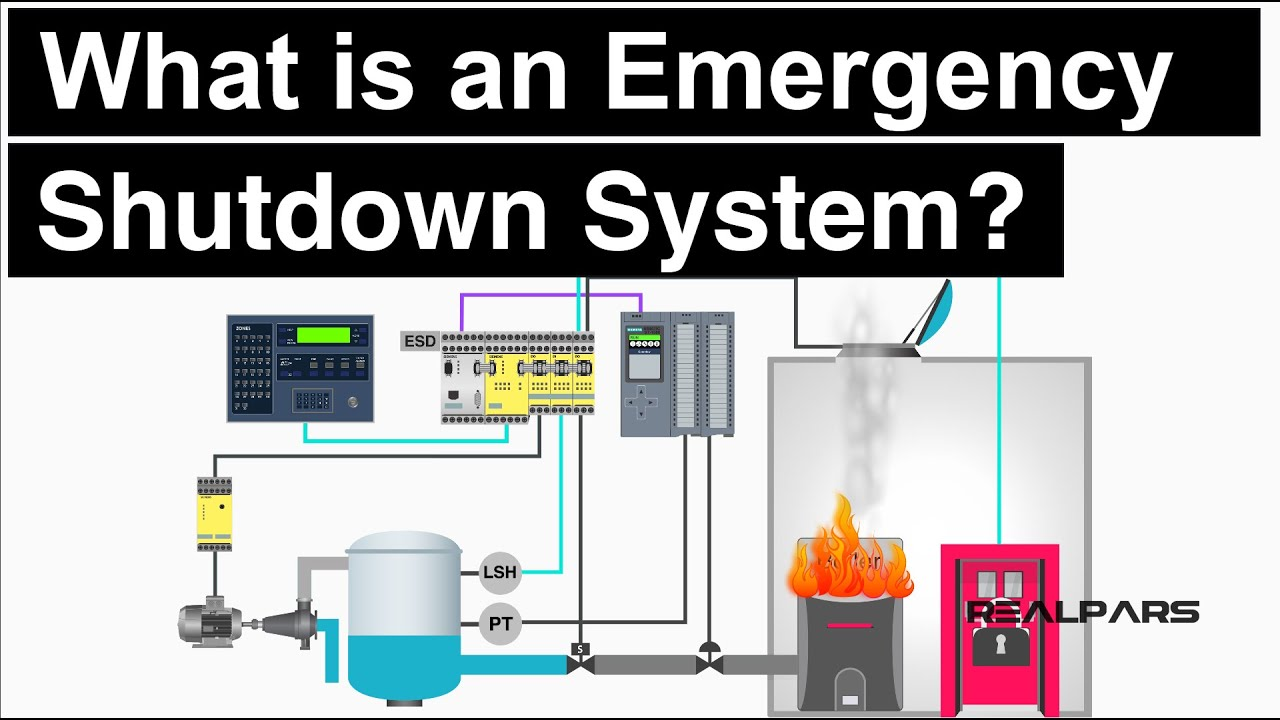
Emergency shutdown systems are critical safety mechanisms designed to quickly isolate power, fuel, or hydraulic sources in the event of a fault, fire, or hazardous condition. In marine environments, they protect crew, equipment, and vessels from catastrophic failure.
🧠 What Is an Emergency Shutdown System?
An Emergency Shutdown System (ESD) is a safety instrumented system that detects abnormal conditions and initiates protective actions—like cutting power, closing valves, or stopping machinery. It’s your last line of defense when normal controls fail.
🔐 Core Objectives:
- Isolate energy sources (electrical, fuel, hydraulic)
- Stop hazardous processes (e.g., engine overheat, fuel leak)
- Prevent escalation (fire, explosion, flooding)
- Protect personnel and equipment
⚙️ Key Components of an ESD System
🧩 Types of Emergency Shutdown Systems
🔌 Wiring and Connection Types
🛠️ Manual E-Stop (NC Contact)
- Normally Closed (NC) contact opens when pressed, breaking control power.
- Use shielded cable and marine-grade push buttons (IP67).
🧠 Automatic ESD with PLC Logic
- Sensors: fire, gas, pressure, temp
- PLC: executes logic (e.g., IF temp > 90°C THEN shut down)
- Output: energizes relay or solenoid to isolate system
🔧 Solenoid Valve Shutdown (Fuel Line Example)
- Relay opens circuit to solenoid valve, cutting fuel flow.
- Include fuse and status LED for diagnostics.
🖼️ Example Diagrams
Here are some visual examples to help apprentices understand the layout and logic:
- Basic E-Stop Wiring Diagram
Emergency Stop Wiring Diagram
Source: ElecDiags - Emergency Shutdown System Logic
ESD System Diagram
Source: RealPars
🛥️ Marine-Specific Tips
- Use corrosion-resistant enclosures and waterproof connectors.
- Label all shutdown points clearly on your vessel’s schematic.
- Test ESD systems monthly—include in your maintenance checklist.
- Train crew on manual override and reset procedures.
🧠 Final Thought.
Emergency shutdown systems aren’t just about wiring—they’re about protecting lives and assets. Whether you’re installing a simple E-stop or designing a full PLC-based ESD, always think safety first. Document your logic, test your triggers, and make your systems intuitive for anyone onboard.
Training Card: Emergency Shutdown Systems (Marine Electrical)
Front Side: Quick Reference
🔧 ESD Types & Triggers
- Manual E-Stop: Push-button, NC contact
- Automatic ESD: Sensor + PLC logic
- Solenoid Shutdown: Fuel/hydraulic isolation
- Hybrid Systems: Manual + sensor-based
🧠 Core Functions - Isolate power/fuel
- Stop hazardous processes
- Protect crew & equipment
⚙️ Wiring Basics - Manual E-Stop: NC contact breaks control power
- PLC Logic: Sensor → Controller → Relay → Shutdown
- Solenoid Valve: Relay opens circuit to valve
Back Side: Diagram & Notes
Marine Tips
- Use IP67-rated buttons & enclosures
- Label shutdown points clearly
- Test monthly & train crew
- Fuse + LED for diagnostics
📝 Blog Post Draft: “How to Wire Emergency Shutdown Systems Like a Pro”
Title:
“Emergency Shutdown Systems: A Marine Electrician’s Guide for Apprentices”
Intro:
When I started as an apprentice, emergency systems felt intimidating. Now, after a decade in the field, I’ve learned how to make them simple, safe, and reliable. This guide breaks down the types of ESDs, how they work, and how to wire them—so you can build confidence and protect your crew.
Sections:
- What Is an Emergency Shutdown System?
- Purpose and safety role
- Types of ESDs
- Manual, automatic, solenoid, hybrid
- How They Work
- Sensors, logic, relays, shutdown devices
- Wiring Examples
- Diagrams and connection types
- Marine-Specific Advice
- Materials, testing, labeling
- Final Tips for Apprentices
- Safety mindset, documentation, crew training


