

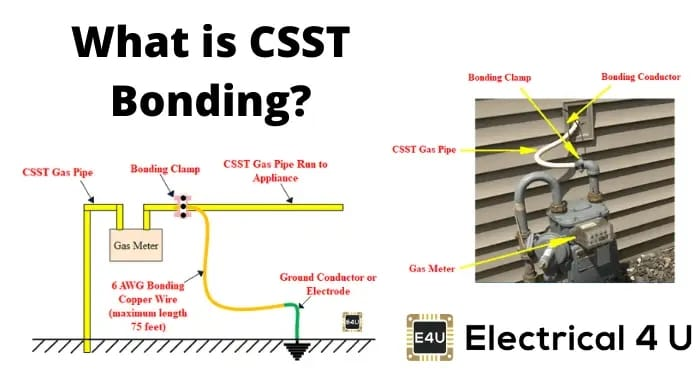
- Bonding ensures that metal gas piping is electrically connected to the grounding system to prevent potential voltage differences.
- Grounding typically refers to connecting electrical systems to earth — but for gas pipes, inspectors are looking for bonding.
✅ How to Bond a Gas Pipe System (Per NEC 250.104(B))
- Use a listed bonding clamp: Secure it to a metallic portion of the gas pipe (not flexible connectors).
- Connect with a copper conductor: Usually #6 AWG copper is sufficient, but check with your AHJ (Authority Having Jurisdiction).
- Terminate at the grounding electrode system: This could be the ground rod, water pipe electrode, or the panel’s grounding bar.
- Avoid CSST unless it’s listed for bonding: If you’re using Corrugated Stainless Steel Tubing, it must be bonded per manufacturer specs — often with a special bonding clamp.
According to the Alabama Public Service Commission’s Gas Pipeline Safety Division, inspections focus on:
- Proper bonding of metallic gas piping
- Compliance with NFPA 54 and NEC
- Use of approved materials and methods
- Clear labeling and accessibility of bonding connections
- Diagrams of Proper Gas Pipe Bonding
- Here are some helpful examples:
- Bonding CSST with grounding electrode connection — shows the bonding jumper from the CSST to the grounding electrode system.
- Common bonding locations on rigid gas piping — includes examples of bonding clamps and conductor routing.
- Flexible gas piping bonding overview — highlights bonding requirements for flexible systems like HOME-FLEX.
- Electrical bonding of CSST per IRC and IFGC — includes code references and jumper sizing.
- Primary Codes for Gas Pipe Bonding
- NEC 250.104(B) – Bonding of Piping Systems
- Requires bonding of metal piping systems that are likely to become energized.
- Includes gas piping, medical gas, vacuum, and compressed air lines.
- Bonding must connect to the grounding electrode system to ensure overcurrent protection can trip if needed.
- NFPA 54 – National Fuel Gas Code
- States that CSST (Corrugated Stainless Steel Tubing) must be bonded to the electrical service grounding electrode system.
- Bonding should occur where the gas service enters the building.
- Appliances connected to grounded circuits may provide bonding, but this alone is not sufficient for CSST.
- IRC Section G2411 (310) – Electrical Bonding
- Applies to residential installations.
- Requires bonding of metal gas piping that’s likely to become energized.
- Clarifies that appliance grounding conductors may bond rigid piping, but CSST needs dedicated bonding.
- Emphasizes equipotential bonding to eliminate voltage differences between systems.
- Manufacturer Requirements
- CSST manufacturers (like HOME-FLEX, Gastite, TracPipe) often require:
- #6 AWG copper bonding jumper
- Listed bonding clamp
- Connection to the grounding electrode system
- These requirements may exceed code minimums, so always check the installation manual.


