

As a professional in a specialized technical field, your resume and contact information are your most valuable networking tools. However, in an age where data is a high-value commodity, that same information can often end up in places you didn’t intend.
If you’ve noticed an influx of unsolicited calls and emails from recruitment firms or companies you haven’t directly contacted, you aren’t alone. Here is a breakdown of how your data is likely moving through the industry and what you can do to keep your personal information secure.
How Your Information Circulates
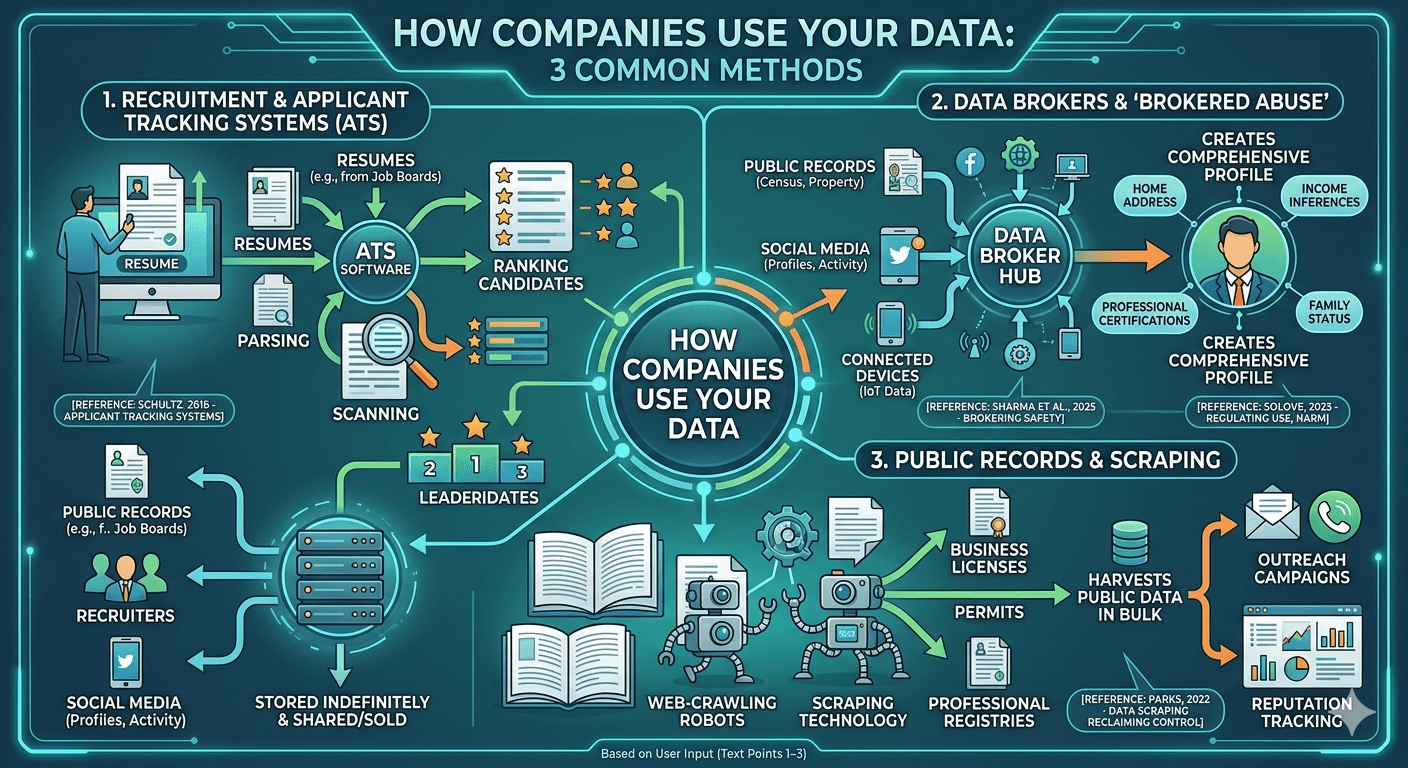
It often feels like a mystery how a company halfway across the country found your cell phone number. Usually, it boils down to three main methods:
- Applicant Tracking Systems (ATS): When you apply for a position through a job board, your resume is “parsed” by software. These databases can store your details indefinitely, and in some cases, that data is shared or sold between recruitment networks looking for specific technical certifications.
- Data Brokers: These entities aggregate “comprehensive profiles” by pulling from public records, social media activity, and even connected devices. They can infer everything from your income level to your professional standing.
- Public Record Scraping: For contractors and business owners, information found in business licenses, permits, and professional registries is often harvested in bulk by “scraping” bots for marketing and outreach campaigns.
Steps to Reclaim Your Privacy
You don’t have to go off the grid to stay protected. Implementing a few “buffer” strategies can significantly reduce your exposure:
1. Use “Bridge” Contact Info
Instead of giving out your primary personal number or email, create a professional buffer.
- Virtual Lines: Use a secondary phone service for business inquiries. You can set these to go straight to voicemail or filter them during off-hours.
- Dedicated Email: Use a specific email address exclusively for job boards and professional inquiries. This makes it easy to see exactly where a leak originated.
2. Sanitize Your Resume
Recruitment software is aggressive. You can minimize what it “sees” by:
- Removing Street Addresses: Only list your City and State.
- Using PDFs: While not foolproof, PDFs are slightly more resistant to simple web scrapers than standard Word documents.
3. Manage Social Media Visibility
On platforms like LinkedIn, ensure your contact details are visible to “Connections Only” rather than the general public. Also, be wary of “Open to Work” badges, as they can sometimes act as a signal for automated scrapers to target your profile.
4. Utilize Data Removal Services
Manually opting out of data broker sites is a long, fragmented process. Automated services can send recurring opt-out requests on your behalf, ensuring your information stays off the market.
The Bottom Line: Your expertise is your business, but your personal data should remain yours. By treating your contact information with the same precision you apply to a technical project, you can maintain your professional reach without sacrificing your privacy.
Choosing to automate your privacy is a smart move for a busy contractor. Manual opt-outs are often intentionally difficult, but “hands-off” tools act as your digital agent, sending legal requests and monitoring for your data’s reappearance every few months.
Here are the top-rated automatic tools in 2026, categorized by how they fit a professional workflow:
Top Automated Privacy Tools (2026)
| Tool | Best For | Key Features | Approx. Cost (Annual) |
|---|---|---|---|
| Incogni | Value & Ease | Automated requests to 420+ brokers; very high “set and forget” factor. | ~$80 – $100 |
| DeleteMe | Thoroughness | Includes email, phone, and card masking to create “bridge” info. | ~$129 – $160 |
| Optery | Visibility | Provides a dashboard with actual screenshots of your data on broker sites. | $39 (Core) – $249 (Ultimate) |
| Aura | Total Security | Combines data removal with identity theft insurance, VPN, and credit alerts. | ~$140 – $200 |
| Privacy Bee | Enterprise Needs | Massive reach (180,000+ sites) and continuous monitoring. | ~$197 |
Which one should you choose?
- If you want a “Digital Buffer”: DeleteMe is excellent because it doesn’t just remove old data; it gives you the tools (masked emails and phone numbers) to prevent new companies from getting your real info in the future.
- If you are on a budget: Incogni offers the best “bang for your buck” for standard data broker removal without unnecessary bells and whistles.
- If you want to see the proof: Optery is the best choice if you like to see exactly which sites had your info and verify that it’s actually gone through their “Before and After” reports.
- If you’re worried about business fraud: Aura or Privacy Bee are better suited for business owners because they monitor for more advanced threats like “home title fraud” or “business reputation” risks.
Pro-Tip for Contractors
When signing up for these services, use the information you found on those unsolicited emails as your “starting point.” Most of these tools allow you to submit “Custom Removal Requests.” If you find your name on a specific niche professional registry or a “leads” site that the automated scan missed, you can simply paste the link into your dashboard, and their experts will handle the takedown for you.